Medicine Creek Farm is a sustainable, regenerative Minnesota family farm near Finlayson, Minnesota. Learn more at www.medicinecreekfarm.com.
Farm Buds is a grassroots community group connecting people with farms, with land, and with each other through on-farm impactful experiences. Learn more at www.farmbuds.org.
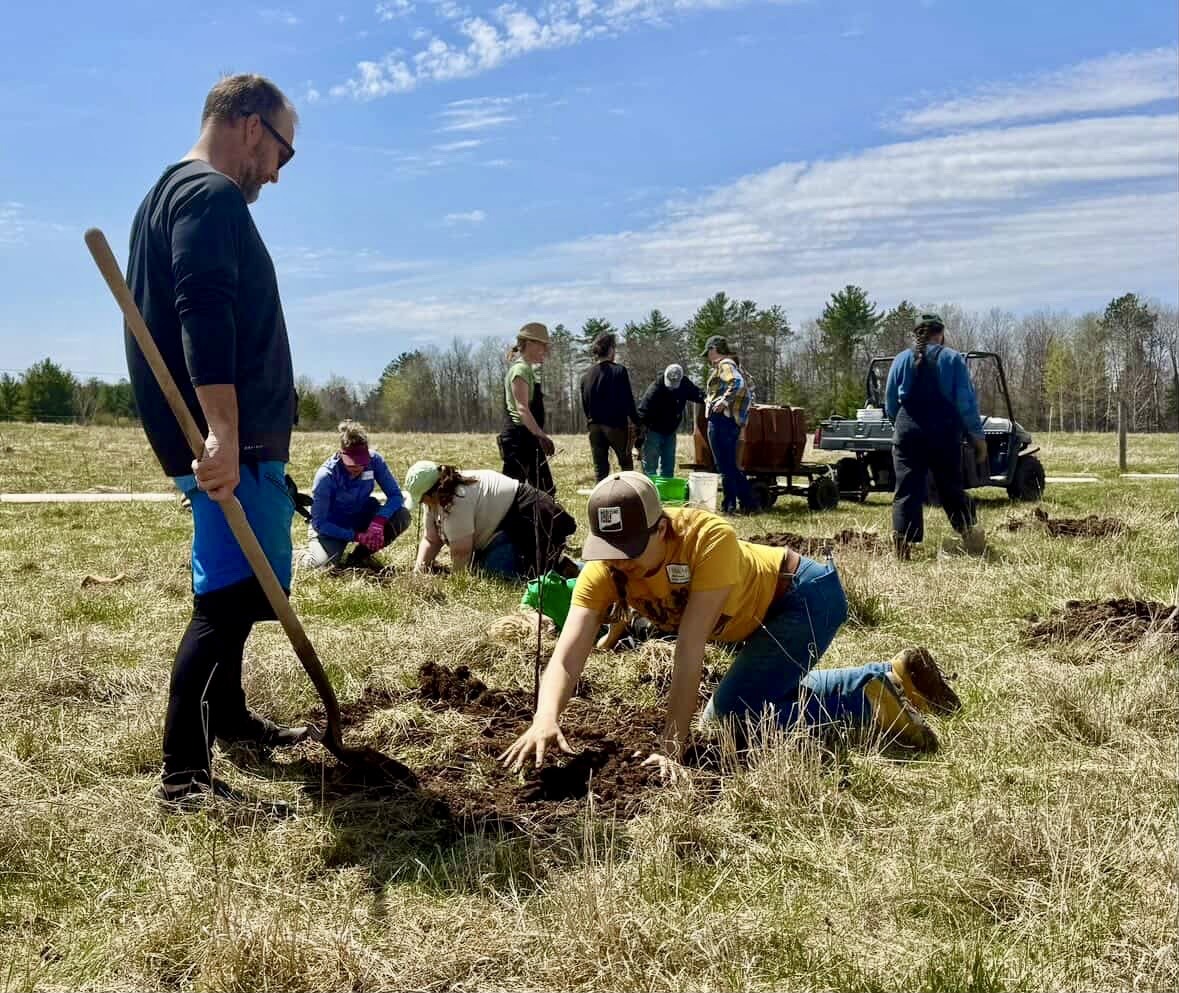
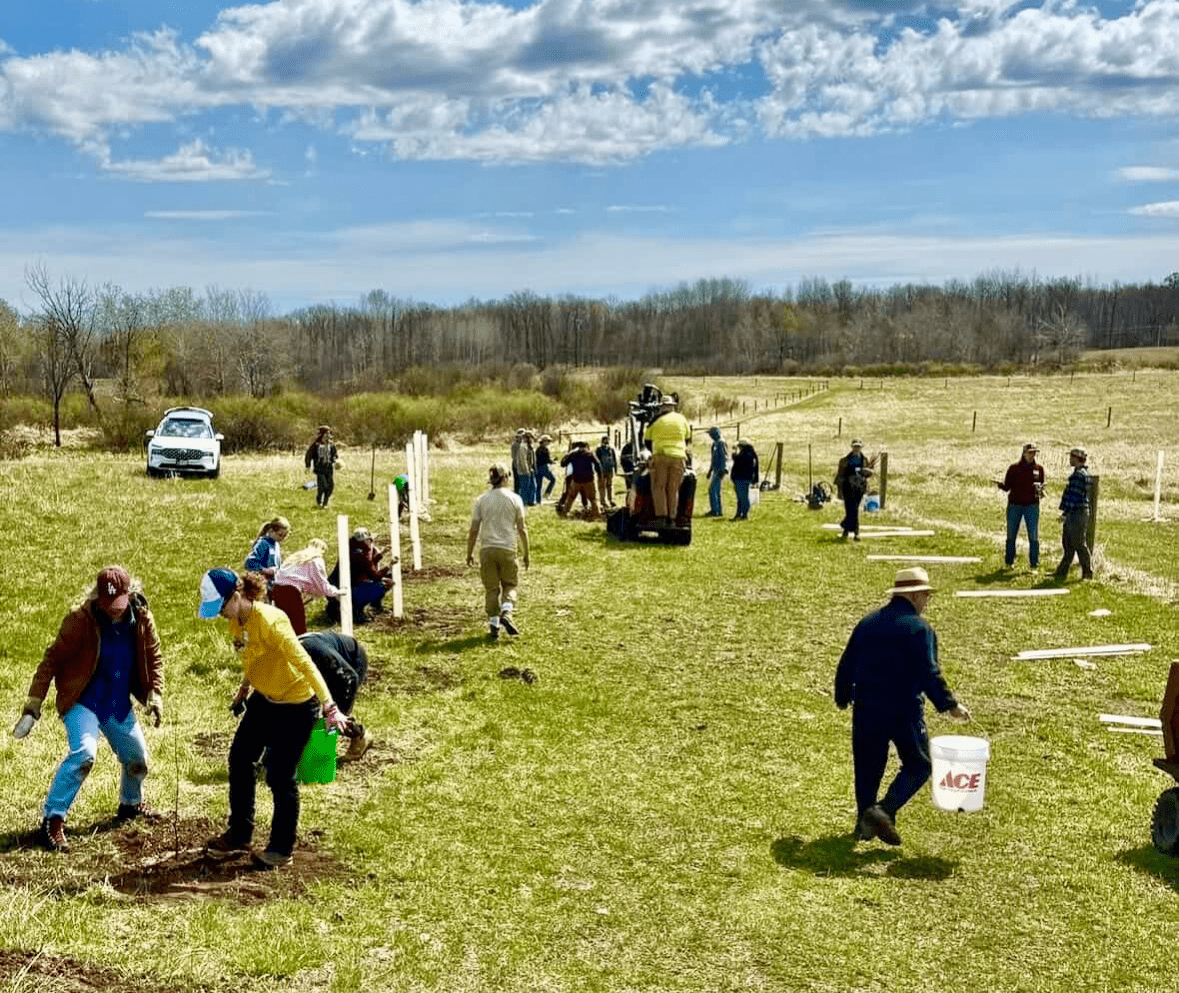
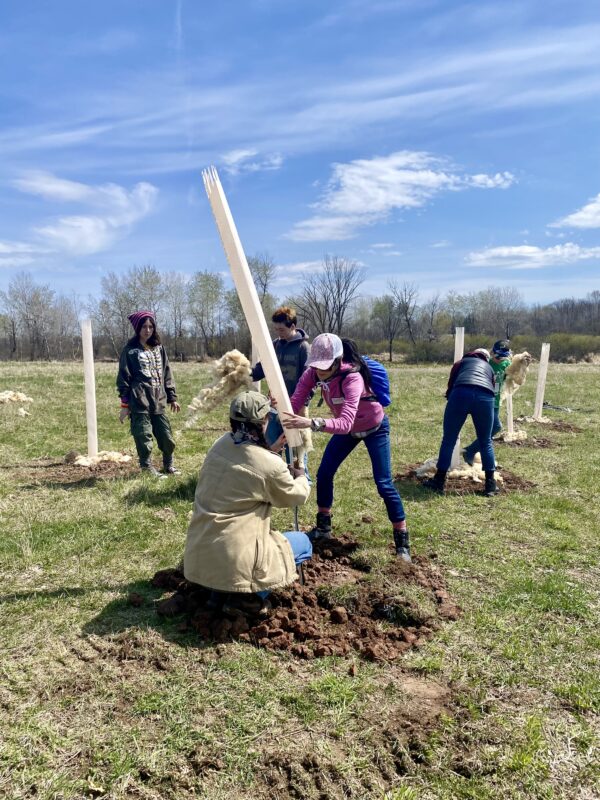
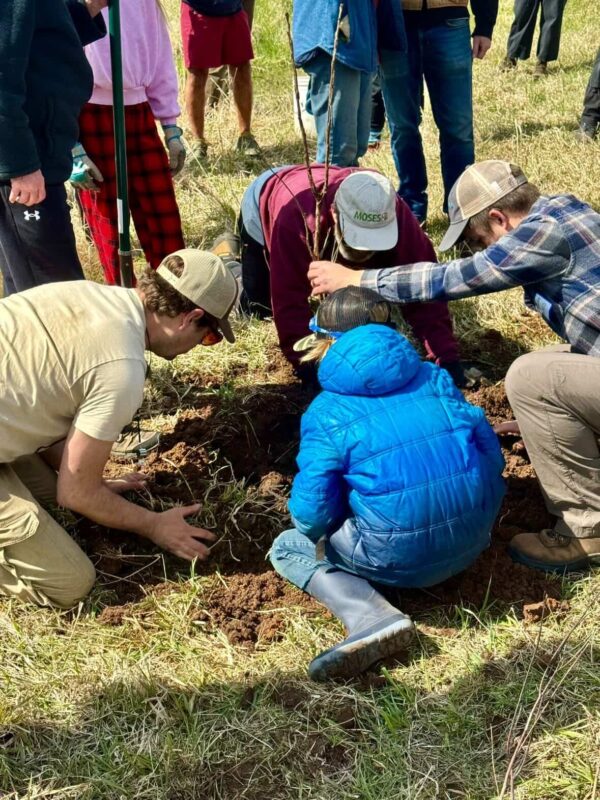
On a clear Saturday morning in early May, more than 40 volunteers spread across a pasture at Medicine Creek Farm near Finlayson, MN, armed with shovels, buckets of water, wool mulch from the farm’s own sheep, and a shared goal. By the time the weekend was over, 600 hardwood tree seedlings were in the ground, including red, burr, and swamp white oak, maple, willow, cottonwood, elm, and hackberry saplings, each one staked, guarded, and watered in.
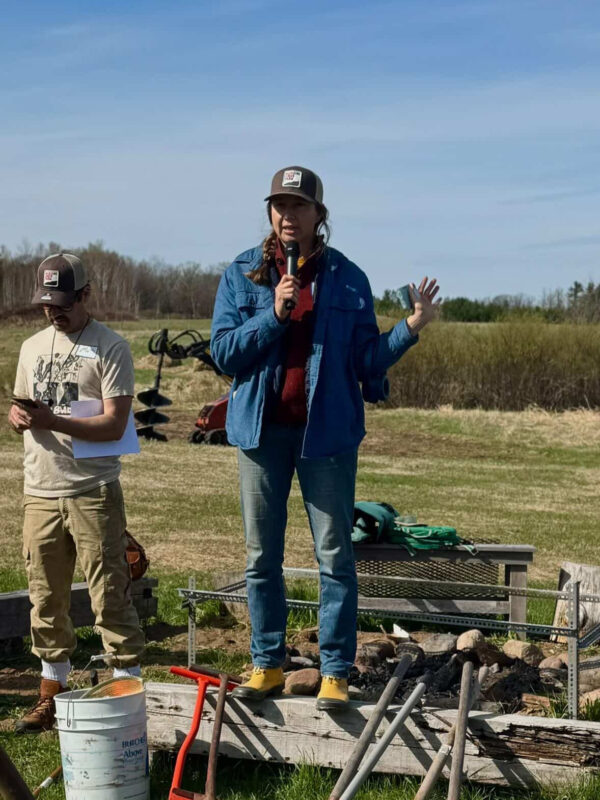
The event was organized through Farm Buds, a grassroots Minnesota-based organization that cultivates community around big on-farm projects. For Medicine Creek’s farmer and Climate Land Leader Hannah Bernhardt, it was the kind of day she’d been imagining since signing her Conservation Stewardship Program (CSP) contract with the USDA Natural Resources Conservation Service in 2024.
The CSP rewards farmers for existing conservation practices (in Hannah’s case, adaptive grazing) while funding new enhancements. She’d already completed several: interseeding pollinator-friendly flowering legumes into her pastures and establishing a new one-acre native prairie planting. But the tree project was different in scale.
“I’m sure you can see how this feels like a daunting task,” Hannah wrote to her community when she first floated the idea of a volunteer planting day. “But after talking with SWCD foresters, I’m convinced this will be a fun and fulfilling day for 30–40 volunteers willing to come out and lend a helping hand.”
Planting more trees than strictly needed was part of the plan from the start. Young tree establishment is hard, and planting in abundance increases the odds of lasting success. The goal isn’t just to get seedlings in the ground, but to establish a silvopasture: a system where trees grow alongside livestock, eventually providing shade, carbon sequestration, and wildlife habitat.
Enter Farm Buds
Farm Buds began as a personal commitment by its founder, Matt Barthelemy, to stay active and get outside through the difficult stretch of late winter into spring. When others joined him, the group evolved from bike rides and potlucks into something with more roots: showing up for farms and the people who tend them.
Now, Farm Buds has organized 136 trips across 55 farms in Minnesota and Wisconsin. The model is straightforward: pair a farmer who has an accessible project, big or small, to work on with a community of people who want to connect with land, learn something real, and work alongside others. Add good food (at Medicine Creek, that meant Butcher Brian feeding the crowd) plus camping and a bonfire, and the work becomes a gathering.
For many volunteers, it’s their first time meeting a farmer or setting foot on a working farm – and they leave with more than just sore muscles. They’ve learned how food and farming systems actually work, discovered parts of the region they’d never thought to explore, and worked alongside a welcoming community of people interested in farming and sustainable futures.
“Some things feel hopeless right now,” Hannah wrote to volunteers after the event. “But last weekend, out in the pasture, did not.”
Many Hands, Many Jobs
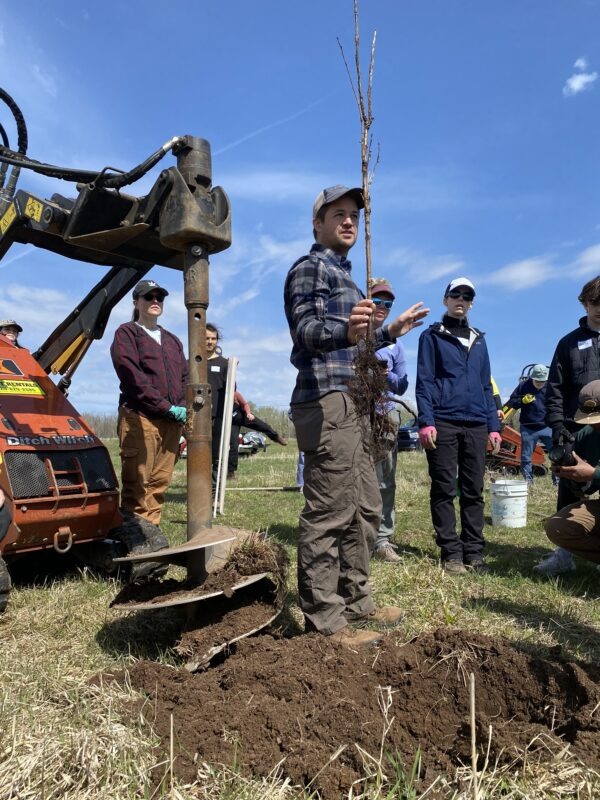
Part of what made the day work was the variety of tasks. Not everyone needed to be comfortable with a dibble bar or know how to plant bare-root seedlings (though training was provided on-site). There were plenty of other jobs for all ages and interests: tamping soil around each new tree, driving stakes, installing deer-proof tree guards, hauling water, and tucking raw wool from Medicine Creek’s own sheep around the base of each guard as mulch.
The result was 600 trees planted across a single weekend, something Hannah described as “incredible”, with the remaining seedlings to follow as the season continues. Volunteers left with an open invitation: come back any time to see how the trees are growing, stay in the barn or camper, join a Saturday tour, or return for the Butcher’s Dinner and Barn Dance in September.
Events like this one illustrate something that Farm Buds has built its identity around: that conservation work doesn’t have to be solitary, technical, or inaccessible. When a farmer can invite a crowd into a project and that crowd shows up ready to dig, learn, and stay for dinner, the scope of what’s possible expands.
For Hannah and Medicine Creek Farm, those 600 trees are a beginning. Over the coming years, they will sequester carbon, shelter livestock, and bring birds and wildlife back to a pasture that is slowly, intentionally becoming something more.
Blog post by Charlie Zieke, communications consultant. All photos provided by Medicine Creek Farm.
Learn more about Farm Buds at farmbuds.org.
Learn more about Medicine Creek Farm at medicinecreekfarm.com or on Instagram and Facebook @medicinecreekfarm.