Zumwalt Acres is a regenerative agriculture community in Sheldon, Illinois, committed to developing a model of land stewardship that is ecologically sustainable and socially responsible, rooted in Jewish values. Learn more at zumwaltacres.org.
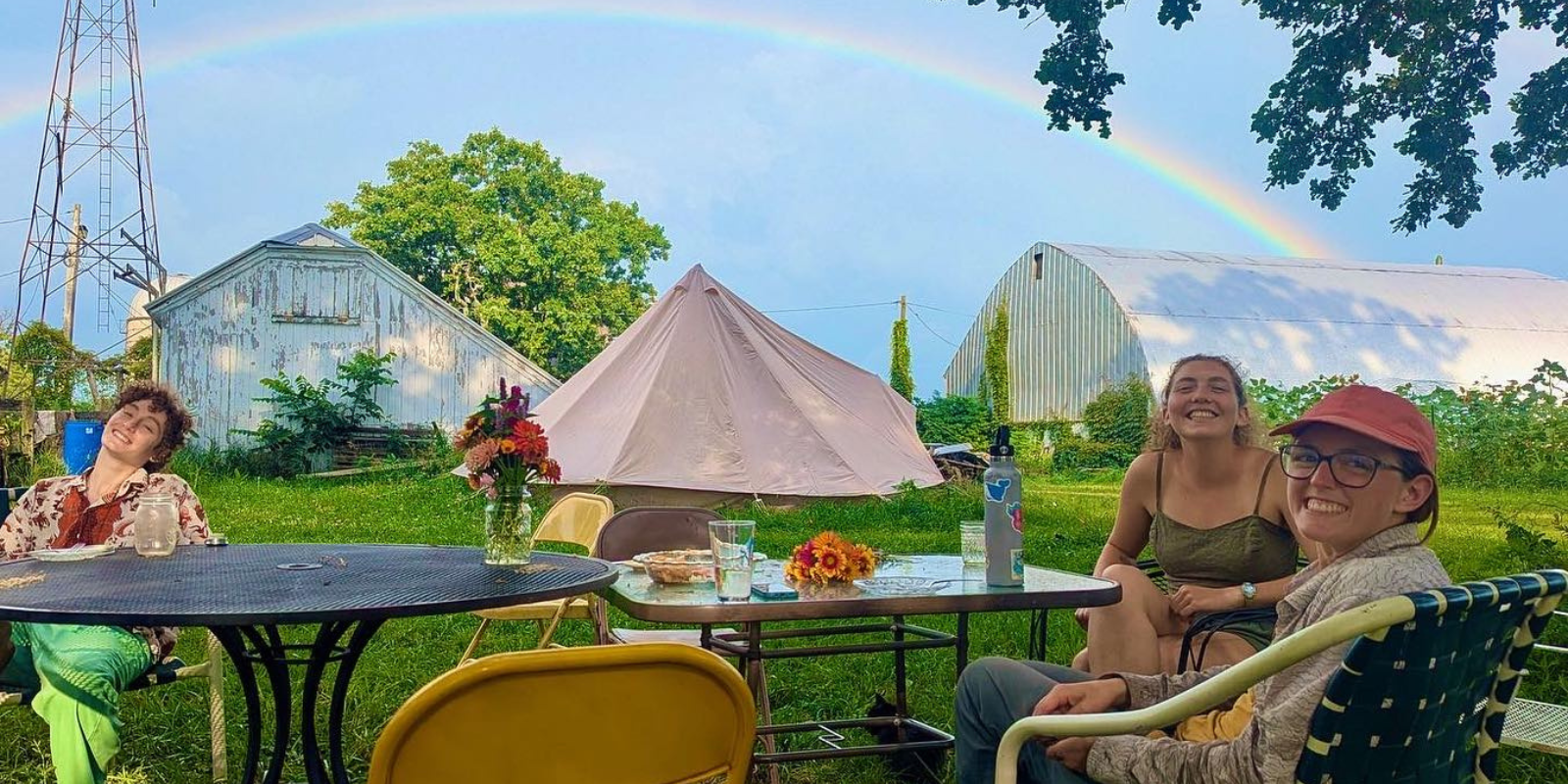
Tending Culture and Climate at Zumwalt Acres
On a piece of Illinois farmland dominated by corn and soy for the past century, a different kind of agriculture is taking root. Zumwalt Acres sits outside Sheldon, Illinois, on the unceded homelands of the Kickapoo, Peoria, Kaskaskia, Potawatomi, Myaamia, and Oceti Sakowin peoples and has been a site of home, healing, and transition for migrating Indigenous peoples prior to colonization.
The community manages about 50 acres, using the land for vegetable and perennial fruit production, silvopasture plots, mushroom cultivation, and chemical-free hay grown on fields transitioning from conventional corn and soy.
At the center of the work is Gavi Welbel, who coordinates events, partnerships, grants, and climate research; Acacia Berg, who co-manages the farm, event planning, and perennial crop projects; and Eric Luu, who co-manages the farm and oversees ecological restoration, seed adaptation, and on-farm education.
Founded in 2020 on land that has been in Welbel’s family for over 150 years, the project combines regenerative farming, cultural practice, and cutting-edge climate research to model diversified, place-based, community-based agriculture. The farm is situated in Iroquois County, now the second-highest corn and soy producer in the United States.
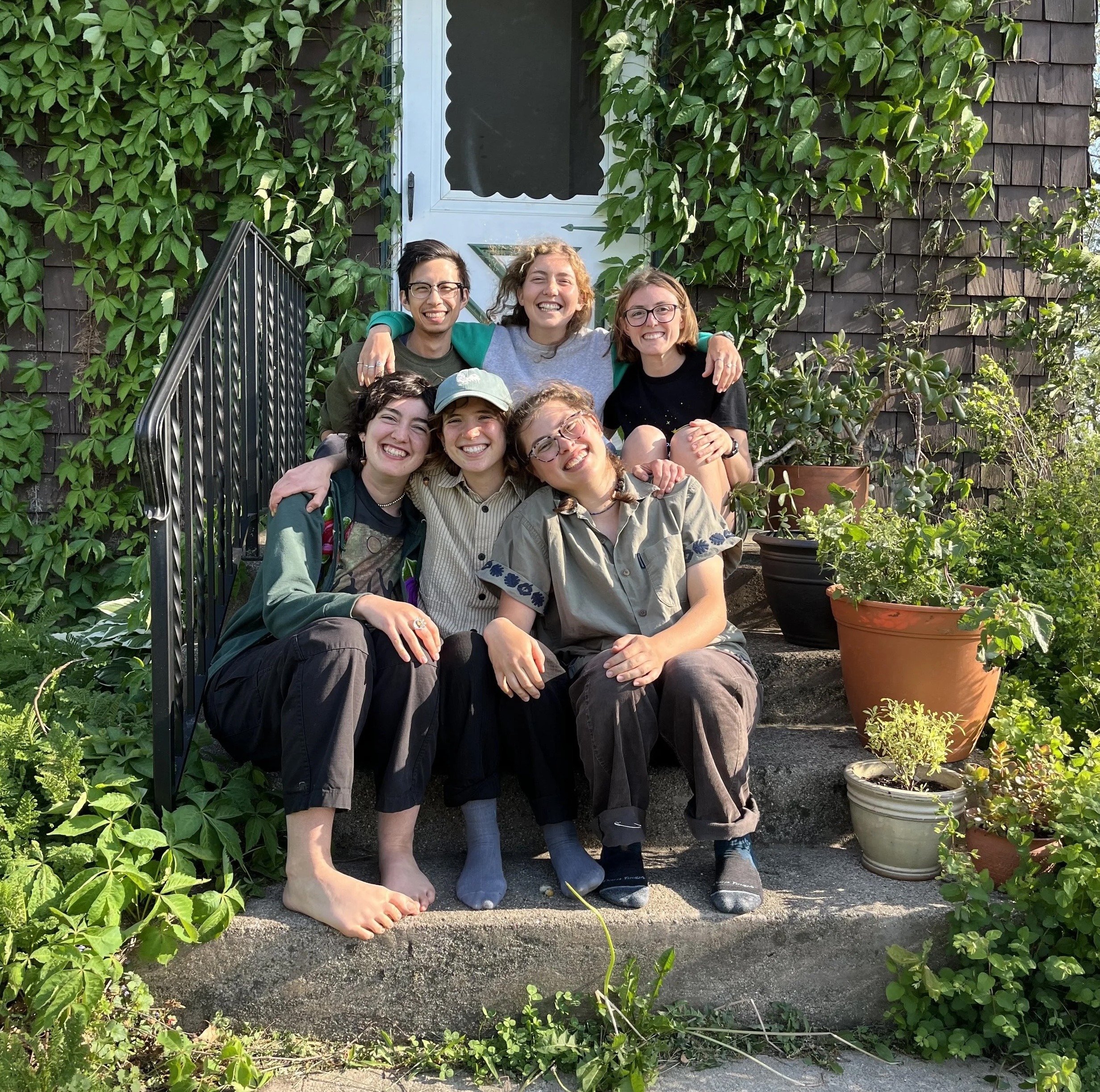
“I grew up hearing stories from my dad about how this landscape changed in his lifetime,” Welbel says. “How industrial agriculture and disinvestment from rural communities reshaped everything: the forests, the waterways, and the food systems. I felt compelled to engage with that legacy and imagine another option.”
“Loss of biodiversity in this area feels starkly noticeable,” added Berg. “We’re in the heart of the Corn Belt, where you can go for miles and just see corn and soy. The impacts of that monoculture show up in the soil itself: very few worms, degraded soil structure, and waterways that aren’t safe to swim in.”
Farming as Culture-Tending
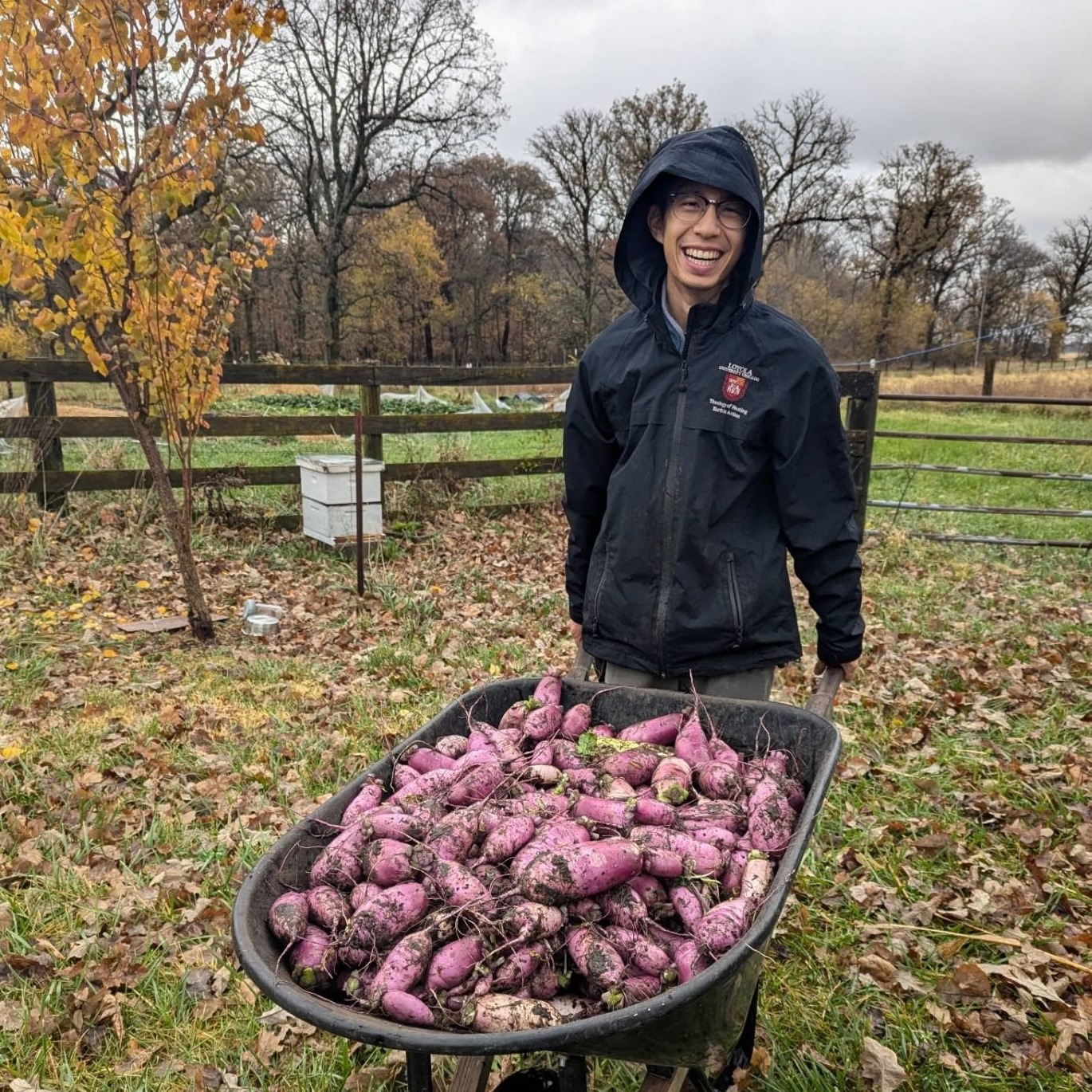
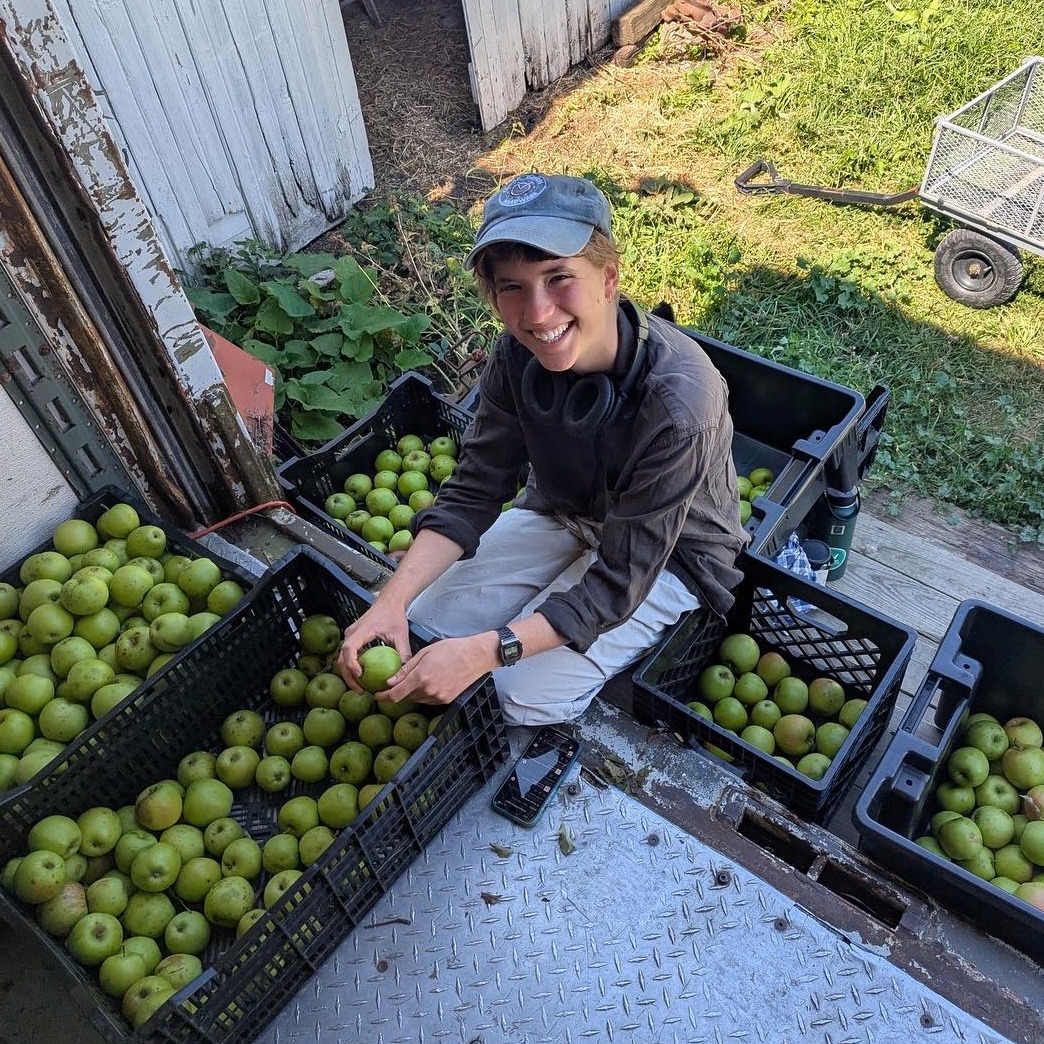
Their vision goes beyond production. Zumwalt Acres is both a working farm and a learning community, hosting a fellowship for young adults to live, learn, and farm together. Fellows come from a wide range of backgrounds, from climate scientists to first-time growers. They learn food production, soil health, and community decision-making skills, often staying connected to the project long after their fellowship ends.
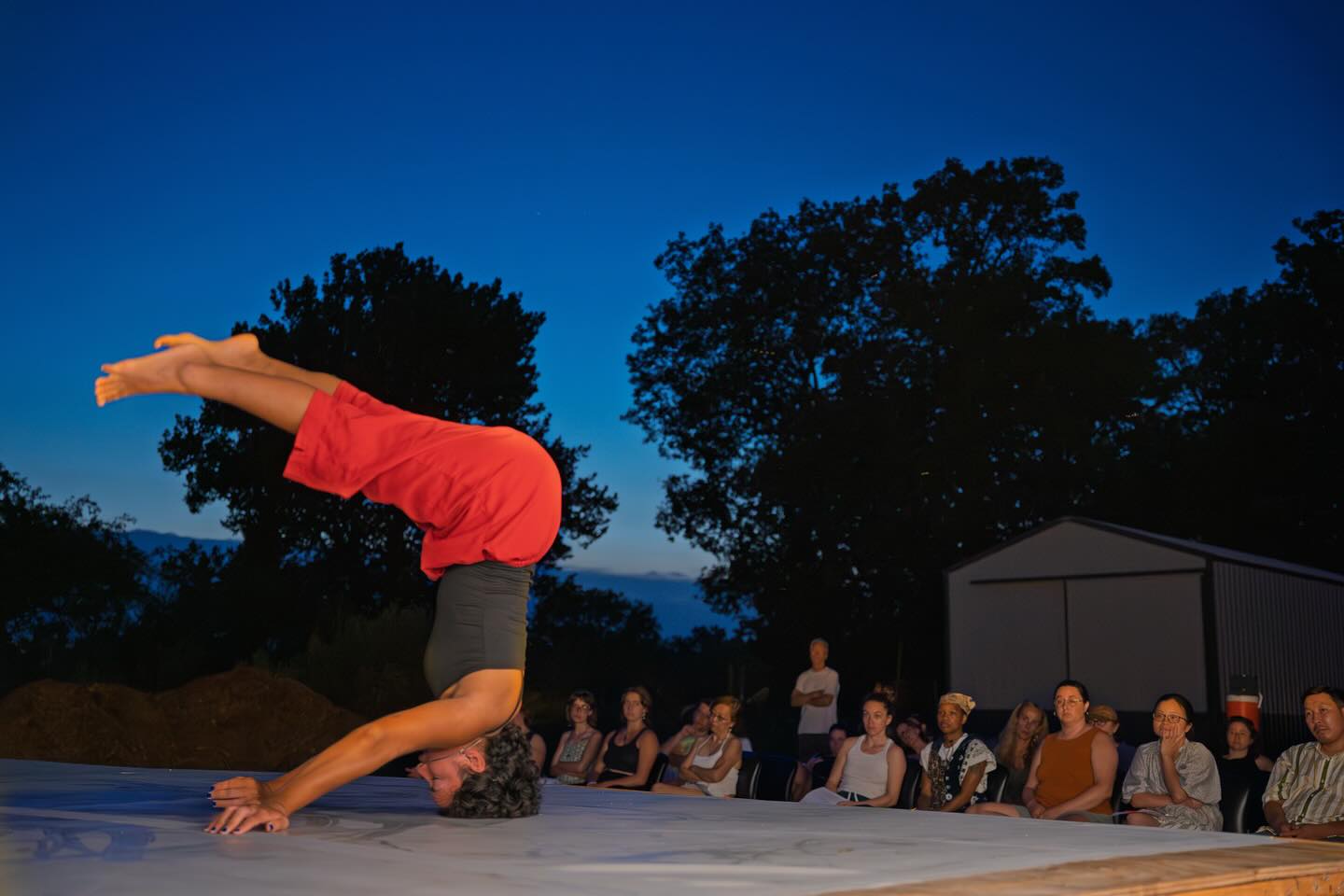
Community life at Zumwalt Acres is woven with seasonal rituals and shared learning. Jewish teachings on land stewardship, like periodic rest for the soil and donating harvests to those in need, anchor the work. The team also hosts multi-faith gatherings, field days, and events (like a summer dance festival exploring how movement can express care for land).
“Culture tending is as important as crop tending,” says Berg. “It’s about paying attention to how we build relationships with each other, with the plants, and with the more-than-human world.”
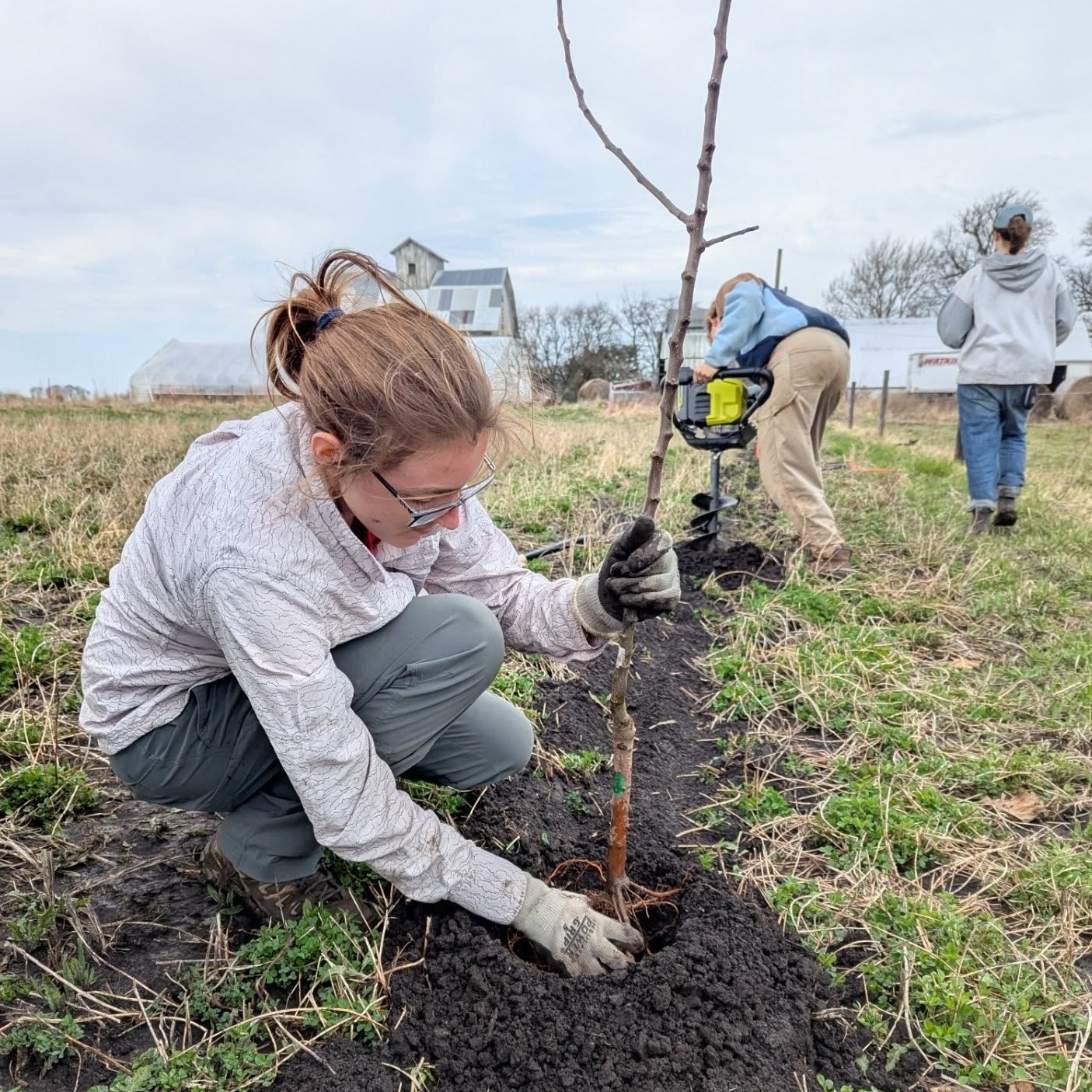
Perennial systems like these are central to the farm’s climate strategy. Trees and shrubs draw down carbon, stabilize soil, support birds and pollinators, and rebuild water cycles. Windbreaks and alley-cropped rows create microclimates that buffer extreme rain and heat, both of which are becoming more frequent in Midwestern states.
“Rain has become sporadic and concentrated,” says Luu. “Sometimes we get six inches in a day; other times it’s weeks of drought. It’s hard to crop-plan when the seasonal patterns don’t hold anymore.”
In response, Zumwalt Acres is testing ways to re-diversify the landscape, from silvopasture to mushroom compost systems that recycle nutrients on-site. They also work with regionally adapted seed networks, including the Experimental Farm Network, to select crops resilient to new Midwestern conditions like okra, butternut squash, and even perennial kale.

A Living Lab for Carbon Research
Beyond its farming systems, Zumwalt Acres is one of the few small farms in the country conducting field-scale carbon sequestration research in collaboration with major institutions. Welbel coordinates studies with Yale University, the University of Illinois, and the Lawrence Livermore National Laboratory, examining how natural processes can be accelerated to capture atmospheric carbon.
In 2020, the team began experimenting with enhanced rock weathering, a process that mimics Earth’s own geologic thermostat. Over thousands of years, silicate rocks naturally react with carbon dioxide and water to form stable bicarbonates, storing carbon in ocean sediments. The research question: could this reaction be safely and effectively sped up on farmland to reduce atmospheric carbon dioxide and slow climate change?
To test it, Zumwalt Acres applied finely ground basalt rock dust, a byproduct from local quarries, to vegetable beds, a 20-acre hay field, and conventional farmfields. “It works a lot like applying lime, a practice conventional farmers do on a regular basis in this region” Welbel explains, “except basalt can capture twice as much carbon as lime.”
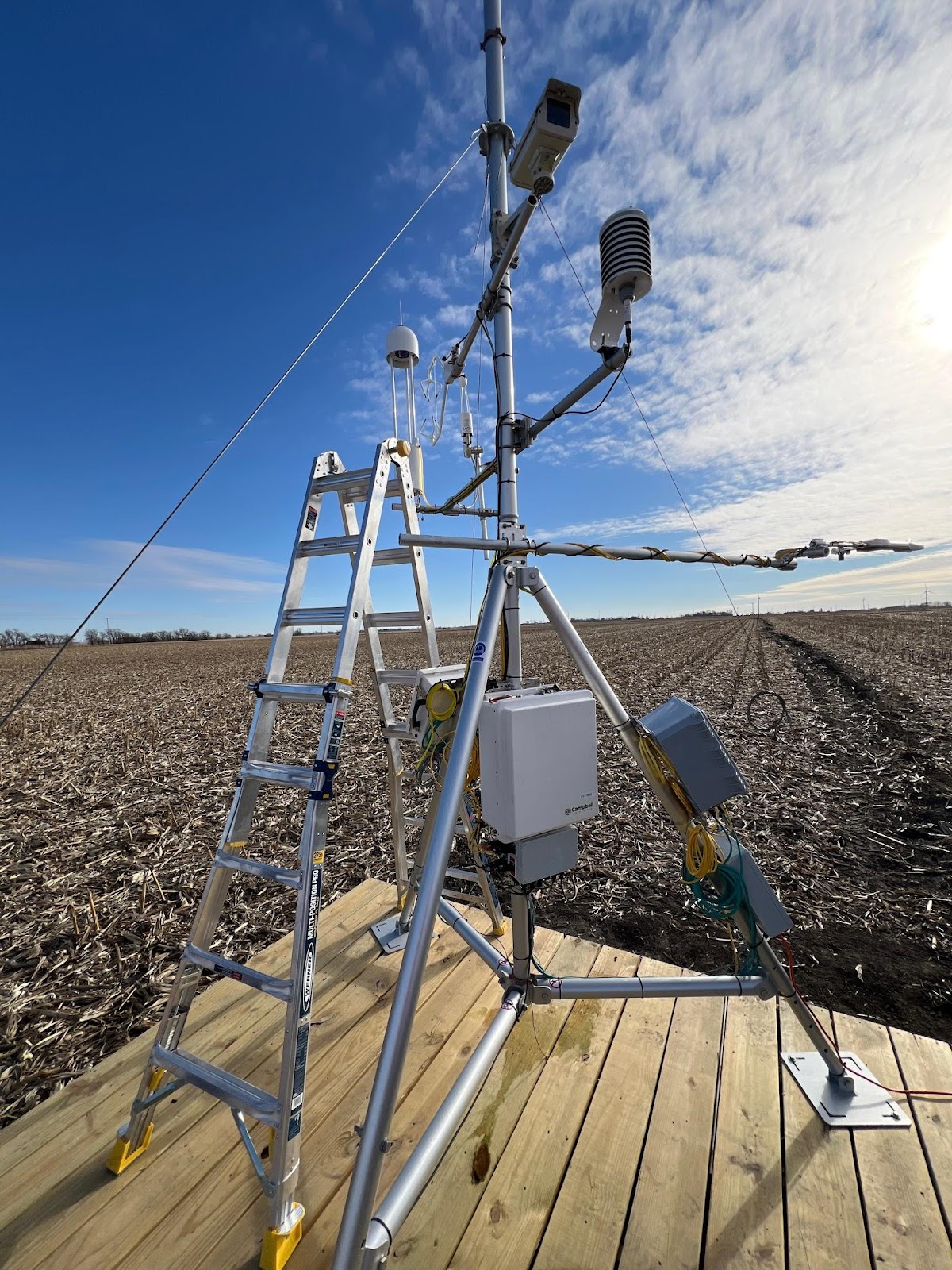
Since 2020, they’ve expanded trials to hundreds of acres across neighboring corn and soy fields, setting up control and test plots. Instruments called flux towers track greenhouse gas emissions, wind, moisture, and temperature; soil and water samples are regularly collected to measure carbon capture and microbial life.
The results are still early, but promising. “This is one of the most robust field studies on enhanced rock weathering in the world,” says Welbel. “It’s multidirectional with scientific data, farmer observations, and local dialogue all feeding into one another.”
The work also fosters conversation with nearby conventional farmers, many of whom have begun collaborating on research plots. “When we talk about climate solutions,” says Luu, “it can’t just be theory. It has to meet people where they are on their land, with their questions.”
Zumwalt Acres’ scientific partnerships extend beyond basalt. Earlier in their history, the team experimented with biochar, a carbon-rich charcoal made by burning wood in low oxygen. Using downed ash trees from their woodland, they produced biochar and applied it around young trees and garden beds. The findings were mixed: while useful as a soil amendment, the process proved labor-intensive and less effective for carbon storage at a mid-scale farm.
“So much of climate research is about scale,” Welbel notes. “What works on a small plot or a large industrial site doesn’t always make sense for community-scale farms like ours. But that learning still matters – it informs how climate projects can actually fit into rural economies.”
Looking Ahead
For Berg, the motivation remains personal. “Being in community here is an intersection of a lot of identities that are important to me,” she says. “It’s how we embrace regenerative agriculture in a holistic way – not just soil health, but the health of our relationships, our culture, and the ecosystems that hold us.”
The team plans to continue expanding both its perennials and research scope. Next steps include building out their silvopasture (a system of growing trees with livestock to provide food and shade for the animals), expanding climate-adapted seed production, and hosting another year of fellows, community gatherings, and events in 2026.
Their combined methods – agroforestry, seed adaptation, enhanced weathering, cultural gathering – model how stewardship can hold both measurable and relational climate benefits. Each planted tree and every shared meal contributes to rebuilding thriving and resilient ecosystems.
This work points to the next chapter in regenerative agriculture: one where farmers, scientists, and communities co-create climate knowledge rather than operate in isolation. That future is already visible at Zumwalt Acres, where perennial systems meet research plots and cultural traditions coexist with soil sampling. “All of it is learning,” says Welbel. “Every season, every person who comes here adds to the story.”
Interview and article by Charlie Zieke, communications consultant. All photos provided by Zumwalt Acres.
Learn more and stay in touch with Zumwalt Acres by visiting zumwaltacres.org or by signing up for their newsletter.