Crafting with Willow: a Practical Guide

A quintessential tree recognized by many is the weeping willow. The slender, dangling branches that sway with the wind and picturesque canopy evoke feelings of calm and an admiration of nature’s beauty. This sense of tranquility can be a starting point for a deeper relationship. Willows invite us to connect back to the natural world and to our crafty spirits. From the quiet harvest of fall to the abundant growth of summer, a willow project helps us tune into the four seasons and the cycles of nature.

While weeping willows are the most familiar, the willow family has over 300 species in the genus found often in cold and temperate areas, in moist soils. They are characterized by their moisture-seeking roots and their fast growth. Willows are deciduous, meaning they shed their leaves, and it is during this time of shedding in late fall when Anna Geyer, an Iowa farmer and Climate Land Leader, goes down to her wetland to harvest her willow shrubs with which she will later create ornaments and other structures. 

The seasonal timing of harvesting is the first step in a year-long cycle. Late fall is a good time to harvest, when the willow rods have shed their leaves. The winter season is a good one to craft and create. As the earth reawakens in the spring is the time to plant the created trellises in the garden. And throughout the summer growing season, one can watch their plants climb the trellises. 

I had the opportunity to take a break from my technology-dominated world and enter the world of willows with Anna Geyer, who runs the Land Alliance Folk School and I participated in her willow retreat. I created several things, including a garden trellis, of which I’ll offer a DIY tutorial below. But, before we begin with the “how,” it’s worth pausing on the “why.” In a world of mass-produced, plastic garden accessories, crafting with a natural, foraged material like willow offers a way to connect deeply with the earth, while teaching many lessons. Willow crafting requires one to work with its unique quirks and to create something of the earth for the earth. This trellis will eventually compost back into the earth or be used as kindling, completing a cycle that a plastic version never can. It’s a functional piece of garden art that helps attune us to earth’s natural rhythms, and stands as a quiet alternative to a disposable economy.

After I had completed weaving my garden trellis, I stepped back to look at the finished obelisk and my attention shifted from my slightly sore fingertips to wondering about this amazing plant. For centuries, willows have provided functional craft materials in a renewable way: the more you coppice them, the more they continue to grow. Coppicing is the practice of cutting a branch to encourage new growth. Willows were commonly used by Indigenous people for many purposes, ranging from building sweat lodges to sitting mats. 

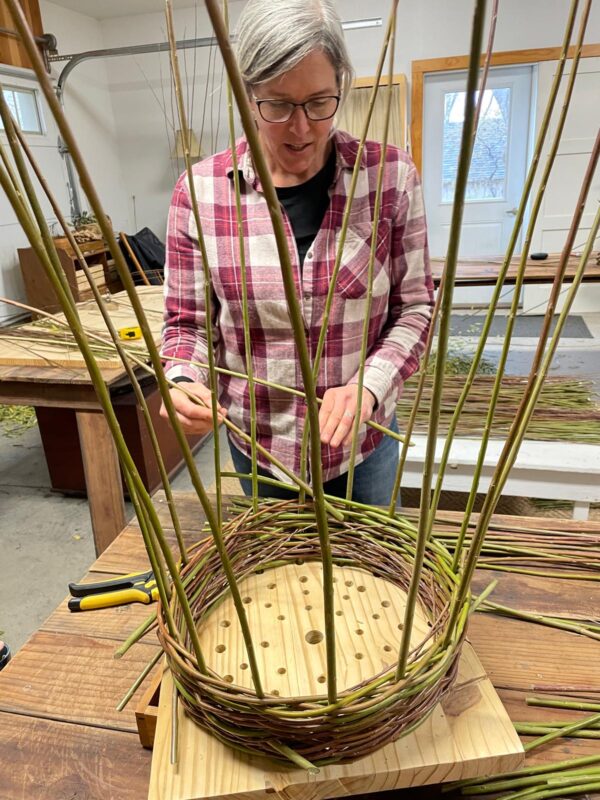
The author working on a wild willow creation

In addition to abundantly providing crafting materials, Willows serve as land stewards, habitat builders, climate allies, and natural healers. Willows are heroes of the landscape.

  • Land Stewards: With their moisture-seeking roots, willows are brilliant for erosion control and soil stabilization. They literally hold the earth together along riverbanks and hillsides, making them critical for flood recovery and protecting water quality.
  • Habitat Builders: A willow grove is a thriving ecosystem and among the best hosts for moths and butterflies. Many willow species bloom early, which is important for many native bees. Shrubby willows offer twig-like structures, perfect sites for nesting birds. 
  • Climate Allies: Among the fastest-growing temperate trees, willows are efficient at pulling carbon dioxide from the atmosphere and storing carbon in their biomass.
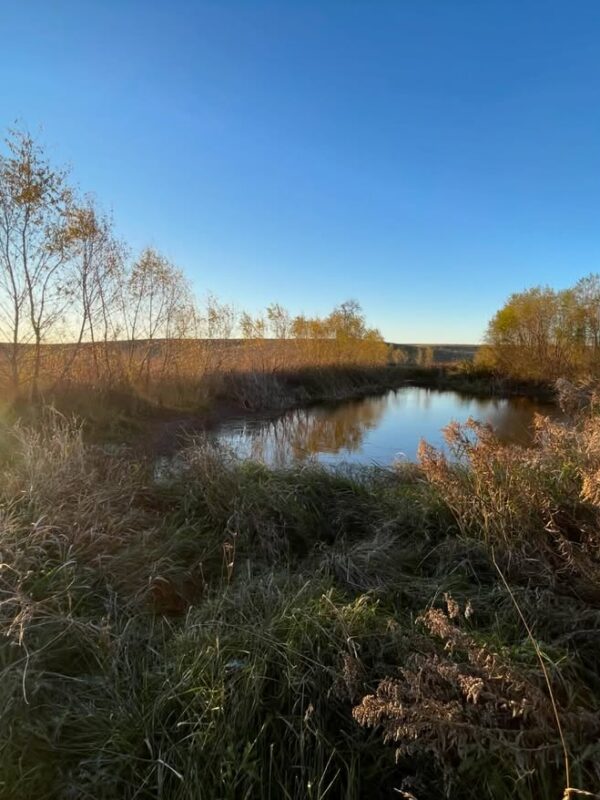
Wild willow growing in Iowa
The author, far left, collecting wild willow with fellow Land Alliance Folk School students

Willows as Healers

Long before pharmaceutical companies patented aspirin, cultures across the world knew about willow bark as a way to relieve pain and fevers. And willows offer us this gift of healing. The bark contains salicin, the original compound from which aspirin was derived. When steeped in water, it creates a tincture that provides relief; it’s a direct medicine from the plant world. There is profound symbolism here: the willow, a tree that bends but doesn’t break in storms, offers medicine that can help us “bend” with the storms of our physical pains.

But the healing offered by the willow is not solely chemical. The act of sitting in the shade of a weeping willow has long been associated with contemplation, a space to process. Its very presence is healing for an overstimulated mind. Perhaps the most accessible way to absorb this healing is through our hands. The rhythmic, repetitive weaving can be meditative, quieting the noise of the world as you focus on the tactile task of constructing.

Lessons from the Rods

While working with the willow, I continued to glean new lessons: if a section doesn’t look or feel right, you can gently back up, undo your steps, and try again. It’s a lesson in addressing misunderstandings in life before proceeding. In an age quick to cancel, the willow offers an alternative: the wisdom to pause, reflect, and understand before weaving on.

Further, the practice of coppicing—cutting back to encourage stronger regrowth—is a powerful metaphor for our own lives. It teaches us that sometimes, we must let go of old parts of ourselves to make way for new, more resilient growth.

Willow also teaches that true strength lies not in rigid resistance, but in flexibility – the ability to bend and adapt without breaking. 

The final, and perhaps most profound, lesson the willow offers is an economic one. Our prevailing system operates on a linear model of extraction, production, consumption, and waste—a model that is visibly exhausting our planet and our spirits. Willows grow regeneratively. The trellis we build serves a purpose, and when its life is over, it returns to the soil as nutrients, closing the loop without waste. This stands in contrast to a plastic trellis, a product of fossil fuels that will eventually break down into permanent waste, its true cost never reflected on its price tag.

Wild willow creations

Crafting with willow asks us to reconsider value in terms of care, craftsmanship, and the health of the system as a whole, a stark contrast to a world demanding we produce more, faster, bigger, cheaper, in a highly extractive, unsustainable manner.

From the fall harvest to the winter craft, the spring planting, and the summer growth, the willow trellis will not just be a support for my tomato plant, but serve as a testament to a different way of being. It is a bridge made of living wood, connecting our creative spirits to the healing power of the earth, and reminding us that our own well-being is rooted in the same natural rhythms of this resilient, graceful tree.

This article was originally published in Mother Earth News (May 2026)
The author forming a willow base
Wild willow grows by a river in Iowa
A willow tree stands tall